


I know starting a home remodel feels stressful; you worry about costs soaring and timelines stretching. The secret to success is having a simple, professional remodeling plan.
I’ve put together this step-by-step home remodeling guide to give you an easy blueprint for managing the process.It will help you save money so you can actually build the dream home you imagine.
Follow these 5 steps for a home remodel to set your remodeling project up for success.
Key Takeaways
|
1. Figure Out Your Needs and Set Your Money Aside
If you are planning a full home remodeling project, your first job is to define exactly what you want done and make sure you have enough money to handle unexpected problems.. Before you do anything else, make sure you know the questions to answer before you remodel to set your vision.
A. The “Worst First” Rule
Before you choose paint, you must identify your reasons for remodeling based on function and safety.
- I always tell clients to fix the “worst first.” This means addressing the structural issues, like the roof or foundation, including water damage restoration if you find leaks or mold. Fixing these protects your expensive new work later.
- To get the most money back from your project, focus your planning a home remodeling project effort on the kitchen and bathroom remodels.
B. Set Your Budget and Create a Safety Fund
You must establish a realistic budget that covers labor, materials, and a safety net for surprises.
- Kitchens and bathrooms cost the most because they require a lot of complex work from specialists like electrical, HVAC, and plumbing trades.
- Please set aside a 20% to 30% contingency fund. This reserve is mandatory insurance for structural surprises like hidden wood rot or old pipes found once demolition begins. Without it, you risk stalling your project mid-way.
2. Finish Your Design and Order Materials Early
A perfect remodel plan is one that is 100% finished and approved before the construction crew shows up.
A. 3D Home Design Program for Visualization
I suggest you use a 3D home design program to create a virtual model of your dream renovation.The 3D design lets you “walk through” the space and ensures your designer and remodeling contractor agree on every detail.
Seeing a virtual model prevents design mistakes, saving you huge costs from last-minute changes.
B. Materials Lead Time Management
Your projected completion date is often controlled by how long it takes for materials to arrive. I recommend you order long-lead items like custom cabinetry and windows immediately after the design is finalized.
These items can take 6 to 18 weeks to arrive because 94% of companies report raw material procurement is the most affected part of the supply chain.Waiting will cause major delays in your timeline.

3. Hire the Right Team and Sign a Clear Contract
Your success depends on the qualified remodeling company you choose and how clear your contract is. To make sure you’re ready to select the best partner, preparing for your first call to a remodeler will give you the confidence you need for this crucial step.
A. Vetting Your Team of Contractors
- You should get referrals from friends and family and look for experienced professionals with good reviews online.
- A professional home remodeling company, like Legacy Custom Home Remodeling, will always provide you with proof of:
- Current licenses and full insurance.
- References to past clients whose projects were similar to your scope of your project.
B. The Contract as Your Protection
- Your signed work agreement must detail the scope of work, how payments are tied to construction stages, and the process for change orders.
- The general contractor gets all necessary permits. These permits, which are nationally tracked by the U.S. Census Bureau as an indicator of new residential housing units authorized, are your legal proof of approval.
- Do not let demolition start without the signed permits posted—it breaks local requirements.
4. Follow the Building Steps and Plan for Disruptions
This step-by-step home remodeling guide clarifies the vital Order of Operations that prevents construction mistakes.
Following this sequence is more critical than ever, as 92% of US construction firms report difficulty finding qualified workers. This shortage often leads to frustrating project delays.
Since successfully managing this entire phase requires detailed planning, you will to prepare home remodeling essentials to ensure success and follow that guide closely.
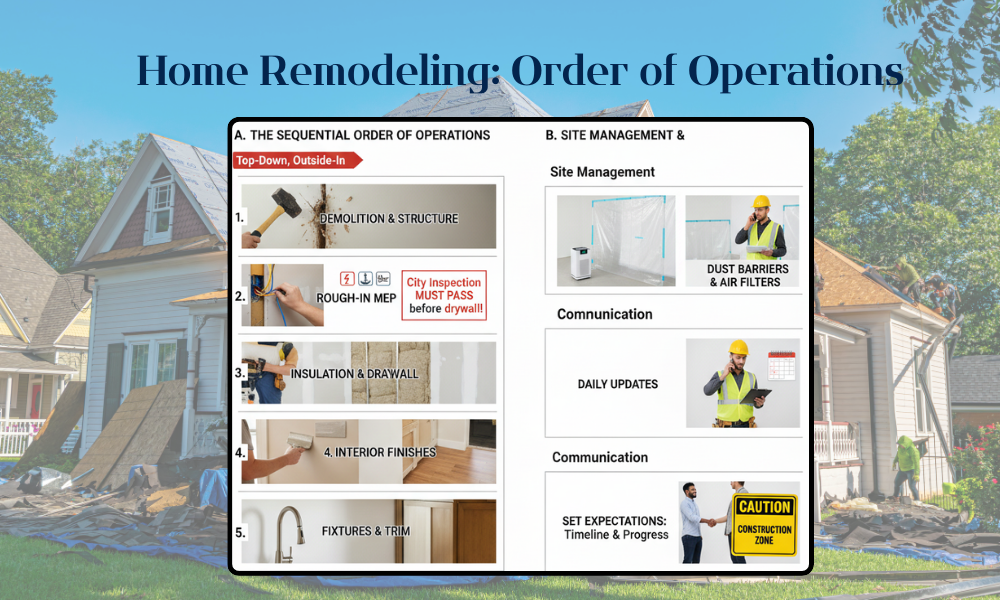
A. The Sequential Order of Operations
- The Flow: The rule is Top-Down, Outside-In.
- The sequence for your renovation is:
- Demolition and structural Work
- Rough-in MEP (electrical, plumbing, HVAC)
- Insulation and drywall installation
- Interior Paint, then flooring services, followed by Cabinetry and Fixtures.
- All work from mechanical trades like electrical HVAC and plumbing must pass the city inspector’s check before drywall is installed.
B. Site Management and Communication
- The construction phase will be messy. Set up plastic dust barriers and use air filters to protect your living area.
- I want you to set expectations for ongoing communication with your general contractor regarding progress updates and timeline adherence.
5.Finish Strong and Get Your Legal Papers
The final step is about checking the quality and getting the legal papers that protect you financially long after the work is done. As you approach the finish line, remember the distinction between fantasy and reality. You can learn lessons from HGTV to understand the expectation vs reality.
A. The Punch List and Project Closure
- Do a final detailed walk-through. Create a punch list of small fixes needed for example: paint touch-ups, sticky doors.
- Hold the final payment until the project is complete and everything on the punch list is fixed.
B. Lien Waivers as Your Financial Shield
- You must get final unconditional Lien Waivers (receipts) from the general contractor and all major subcontractors.
- A lien waiver is a legal promise that they’ve been paid and cannot place a lien against your home. Never make the final payment without receiving this documentation.
- Collect all product warranties and copies of all signed permits.
Ready to Turn Your Plan into a Confident Reality? Partner with Legacy Custom Home Remodeling.
You have mastered the plan. Stop worrying about budget chaos and timeline nightmares, and focus on your finished home.
Legacy Custom Home Remodeling guarantees confidence. We provide the vetted expertise and professional planning needed to navigate the entire process, turning stressful projects into lasting successes.
Ready to guarantee your budget and timeline? Contact us today for a personalized consultation. Transform your home’s potential with detailed budgeting and guaranteed warranties, and start building the beautiful space you deserve!
If you are planning a remodel in the Houston area and want location specific guidance, you can also read our Houston focused guide on how to start your Houston home remodel
Frequently Asked Questions (FAQs)
Is it better to move out of the house during a major remodel?
For projects involving a kitchen and more than one bathroom, it is usually recommended to move out. This improves safety, accelerates the project timeline, and significantly reduces dust and stress for your family.
How should I finance a major remodel, which one is better: HELOC vs. Renovation Loan?
A Home Equity Line of Credit (HELOC) is typically best for smaller, known scopes of work. A specific Renovation Loan (like an FHA 203k) is better for major, complex structural changes as it allows you to finance based on the home’s value after the renovation.
How many city inspections are typically required during a full remodel?
Depending on your municipality, expect between 5 and 10 inspections. These usually include a pre-drywall rough-in for electrical or plumbing, insulation, framing, and a final sign-off inspection Certificate of Occupancy.
Does my homeowner’s insurance cover damage during construction?
Standard homeowner policies often exclude damage caused by active construction. You must confirm your policy is updated, and your contractor should carry General Liability and Workers’ Compensation insurance.
What is the typical length of a general contractor’s labor warranty?
A professional remodeling company should provide a written labor warranty, usually lasting one to three years from the project’s completion date, covering workmanship and installation quality.

Bobby Nation, a second-generation contractor with 35 years of experience, leads every project with expertise and dedication. He works closely with homeowners, guiding them through each step of the remodeling process to ensure a smooth experience and results that meet their goals.