

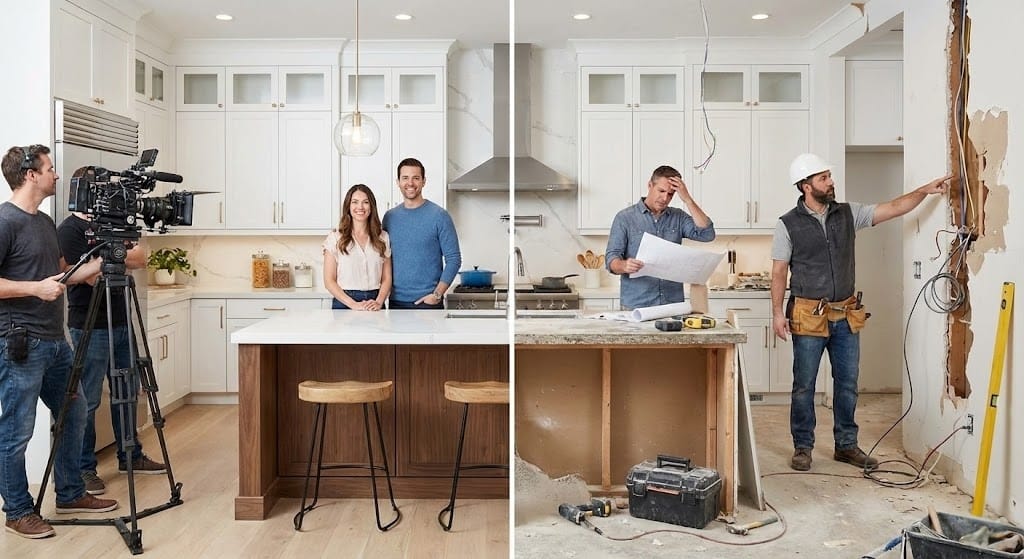
I have worked in hundreds of gutted kitchens. Often, the “HGTV dream” hits a $20,000 structural nightmare. Every home renovation has two versions: the 30-minute television episode, and what happens when the cameras stop.
On-screen, demolition looks like a fun afternoon with sledgehammers. In my experience, it is a high-stakes moment of technical forensics. I find bootleg plumbing or load-bearing structural headers that are loose from the king studs.
Real expertise isn’t about the pretty finishes you see on a screen; it’s about the technical forensics and legal safeguards that happen when the cameras aren’t rolling. Let’s get into the reality of protecting your home.
Key Takeaways
|
Forensic Demolition: Finding Hidden Risks
Forensic demolition is the process of opening walls to identify hidden structural, electrical, or plumbing issues before major construction begins.
This step reveals the true history of your house. In my experience, opening a wall reveals specific problems like “bootleg” electrical splices, which are unsafe wire connections that are fire hazards.
There are several technical questions to answer before you remodel, such as whether your existing panel can handle new loads or if your framing supports a new layout.
These fixes ensure your home meets modern safety codes.
This is not just a precaution; it’s a statistical necessity. According to the EPA, lead-based paint is still present in 87% of homes built before 1940. Identifying these “old home penalties” early prevents expensive delays during a whole-home remodel. It allows you to adjust your plan before you buy expensive finishes.
The Budget Gap: Why TV Costs are Deceptive
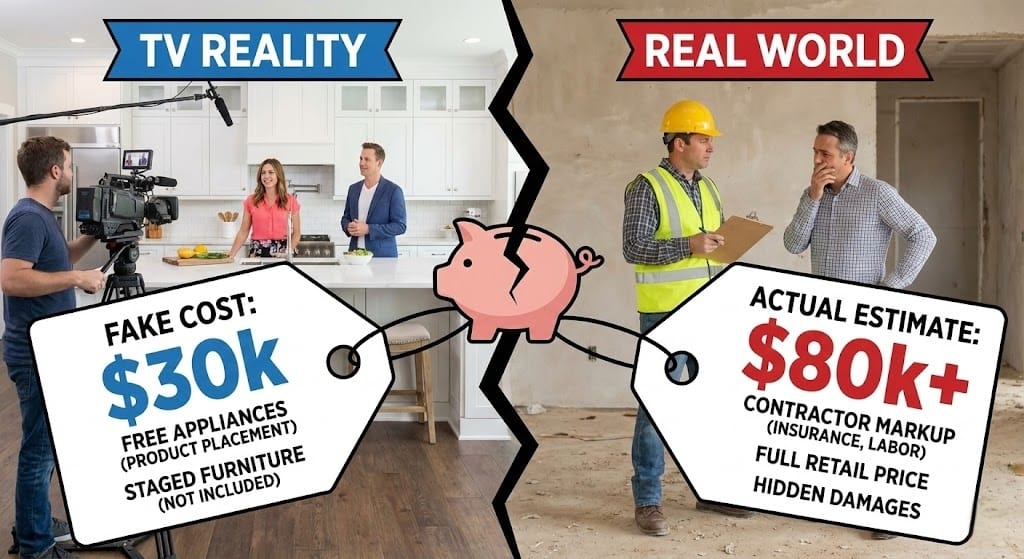
To manage a renovation budget, you must use a line-item estimate and maintain a 20% cash reserve for hidden damages.
Many contractor red flags hide in the allowance schedule. If your contractor sets a $2,000 limit for floors, but you choose $5,000 tile, you pay that extra $3,000 yourself.
Recent data from Clever Real Estate shows that 78% of homeowners exceeded their budget in late 2024, with nearly half going over by $5,000 or more.
Understanding these home remodeling essentials helps you stay in control of your finances.
In that case, Legacy Custom Home Remodeling protects our clients from cost overruns caused by four decades of hidden wear and tear.
I used to think, why was their kitchen only $30k when my quote is $80k? After observing some of their videos, I found there are three reasons TV costs are “fake”:
- Product Placement: Shows receive free appliances and fixtures for airtime. In the real world, you pay full market retail.
- Labor & Markup: TV shows often use “behind-the-scenes” crews whose costs aren’t billed to the homeowner. Real-world quotes include contractor markup (20-40%) which covers insurance, project management, and specialized expertise.
- The Furniture Illusion: Many “reveals” use staged, rented furniture. If you want to keep the couch, that’s an extra expense.
The Critical Path and Permitting Realities
The critical path is the specific sequence of essential tasks that must be completed on time to prevent the entire project from stalling.
TV hides the decision fatigue that stops real-world projects. Knowing where to start when remodeling your home often comes down to procurement.
High demand for quality labor means wait times for custom windows or cabinets can often exceed 20 weeks. If you do not order these during the planning phase, your project sits idle for months while you wait for deliveries.
I find that picking every faucet and handle before demolition starts prevents scope creep. Professionals use these schedules to ensure labor and materials arrive exactly when needed.
I once had a client who wanted to wait to pick their master bath faucets. I asked them to choose during our Legacy design phase. We bought the rough-in valves months early. Because we planned ahead, we avoided a 6-week delay.
Living in Your House During Work
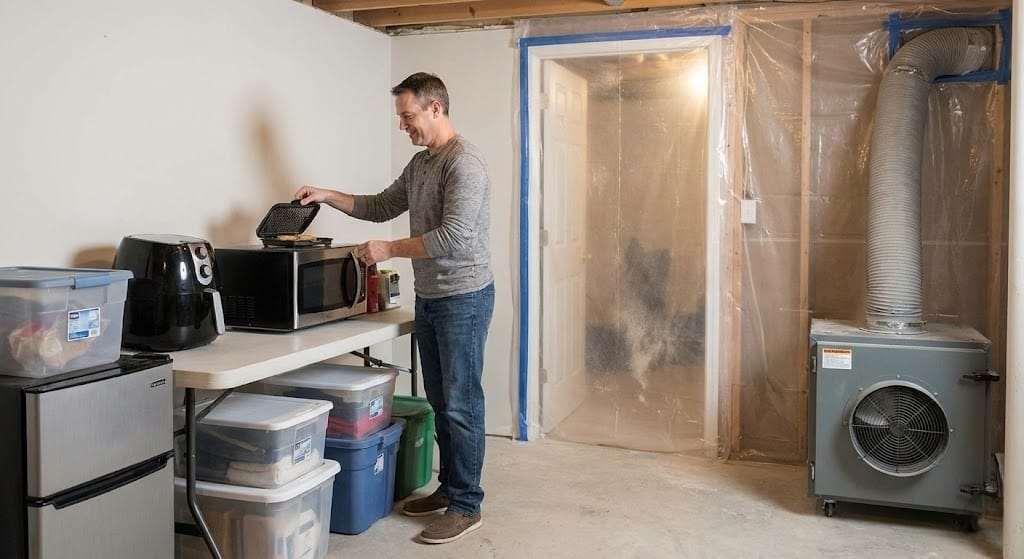
You can live in your house during a remodel if you use industrial dust containment and set up a functional temporary kitchen.
Good site protection uses negative air pressure to keep fine particles out of your living space. When starting a kitchen remodel, I recommend industrial air scrubbers to pull dust out of the air. This protects your lungs and your HVAC system. A clean site leads to better mental health during a long renovation.
Many homeowners set up a basement station with an air fryer and a microwave to keep their daily routine intact. Prioritizing these livability setups is essential for every project where the owners stay on-site.
What is the Difference Between Substantial and Final Completion?
Substantial completion means the space is functional for use, while final completion means every item on the punch list is repaired.
The project continues after the “reveal.” Substantial completion means you can cook in your kitchen. Final completion happens only after the punch list of tiny repairs, like paint touch-ups, is 100% finished. As you prepare for the first call to the remodeler, ask how they document this phase to ensure nothing is missed.
Finish quality is what determines the long-term value of your investment. Always secure a written warranty for both labor and materials before sending your final payment.
Conclusion
Remodeling your home is a big investment that requires a technical strategy. By looking past the TV magic and focusing on legal safety and verified government housing data, you can avoid the traps that ruin budgets.
Your home deserves an approach that values long-term quality. If you are ready to start your home remodeling the right way, Legacy Custom Home Remodeling is here to help. Contact us today for a consultation to build a realistic plan.
FAQs
Does insurance cover a bad remodel?
No. Standard policies exclude faulty workmanship. Ensure your contractor carries high-limit General Liability.
What is a “Right to Cure”?
A legal rule requiring you to give a contractor a fair chance to fix a mistake before termination.
Can I save money by doing the demo myself?
Only if you know where the load-bearing walls and gas lines are. “Self-demo” often leads to accidental damage that costs more to fix than the labor you saved.

Bobby Nation, a second-generation contractor with 35 years of experience, leads every project with expertise and dedication. He works closely with homeowners, guiding them through each step of the remodeling process to ensure a smooth experience and results that meet their goals.