

In 2026, investing in your home really comes down to 2 smart paths-
- Upgrading Your Current Space To Boost Its Value
- Leveraging Your Property As A Foundation For Long-Term Real Estate Investment.
Homeownership is more than just having a roof over your head. I believe that most homeowners overlook their greatest financial asset. For many families, a home represents 60% of their total net worth.
Though many treat home maintenance as a “sunk cost” rather than a capital investment. In a stable market like Houston, you must view your property through the lens of a Buy-and-Hold investor.
We use a strategy called Forced Appreciation. Remodel high-impact areas with a plan. You stop waiting for the market to rise and instead push your home’s value higher yourself, too. This guide provides the exact steps to turn your living space into a high-yield asset.
| Key Takeaways: Manually increase your home’s value through strategic remodeling rather than waiting for market growth. Focus on Kitchens, Baths, and Energy Efficiency for the highest ROI (often over 100%). Use ADUs or multi-unit FHA loans to generate rental income that covers your mortgage. Use a HELOC or the Sahim Model to reinvest your home’s value into high-return upgrades. Stick to the 70% Rule to ensure you never spend more than the home is worth. |
How to Invest in Your Home? 6 Steps to Start Home Investing Correctly
Investing in your home isn’t about chasing trends or overspending on upgrades that look good today but age poorly tomorrow. Done correctly, home investing is a strategic process. One that balances livability, market demand, and long-term value.
Here is how it’s done-

Step 1: Define Your Financial Goals
Before you pick up a hammer, you must know your “Why.” Are you remodeling to stay or to sell?
- The “Stay” Strategy: Focus on lifestyle yield. Improve energy efficiency to lower monthly bills. Add space for a growing family.
- The “Sell” Strategy: Focus on forced appreciation. Spend only on projects that return more than 100% of their cost.
Pro Tip: Use the “7% Rule.” Every major project should aim to increase your home’s value or income by at least 7-10%.
Step 2: Perform a Financial Assessment
Just like a building needs a solid foundation, your investment needs financial preparation. You must know your numbers before you buy or remodel.
- Improve Your Credit Score: Lenders prefer a score of 650 or higher. Pay your bills on time for six months to see a boost.
- Check Your Debt-to-Income (DTI) Ratio: Lower debt helps you get better loan terms for renovations.
- Build an Equity Cushion: Save for a down payment or unexpected costs. Aim for a buffer of 10-20% for any project.
Once you know your budget, you need to pick the right way to pay for your project. Use the table below to compare the best financing options for your home investment strategy:
| Option | Best Use | Interest Rate | Key Benefit |
| HELOC | Phased Remodels | Variable | Only pay for what you use |
| Home Equity Loan | One Major Project | Fixed | Predictable monthly payments |
| FHA Loan | First-time Buyers | Low | Only 3.5% down payment needed |
Step 3: Conduct Deep Market Research
One of the best property investment tips is to start locally. You already know your Houston neighborhood, so use that knowledge to your advantage.
- Understand Local Trends: Look for areas with new jobs or better schools.
- Check Regulations: Ensure your neighborhood allows for Accessory Dwelling Units (ADUs) if you plan to rent a space.
- Analyze Comps: Use sites like Redfin to see what upgraded homes sell for in your zip code.
Step 4: Select High-ROI Projects
Don’t just spend money; invest it. Focus on the “Big Three” to maximize your Resale Value.
- The Kitchen Remodel: A minor kitchen update yields up to 110% ROI. Focus on quartz counters and modern lighting.
- The Bathroom Upgrade: Buyers love spa-like master baths. This project typically yields returns of 80-90%.
- Energy Efficiency: In the Houston heat, HVAC upgrades and attic insulation are critical. They lower your cooling bills and serve as a selling point.
The 70% Rule: I suggest you never spend more than 70% of your home’s After-Repair Value (ARV) minus the purchase price.
Step 5: Leverage Your Equity Strategically
In a 6.5%+ rate environment, you must be smart with your capital.
- HELOC vs. Home Equity Loan: Use a HELOC for ongoing improvements. Use a fixed-rate loan for one-time major builds.
- The Sahim Model: Reinvest your equity back into the home. This increases your net worth while lowering your overall risk.
- Tax Advantages: Remember that many costs, like repair expenses and mortgage interest, are tax deductible.
Step 6: Professional Execution and Management
Professionalism converts a “project” into an “asset.” This is where you partner with experts like Legacy Custom Home Remodeling.
- Avoid the “HGTV Trap”: Real projects take time. Check our expectation vs. reality guide to stay grounded.
- Hire a Turn-key Contractor: We manage the permits and inspections so you don’t have to.
- Slow and Steady: Start with one high-impact project. Once you see the value grow, move to the next.
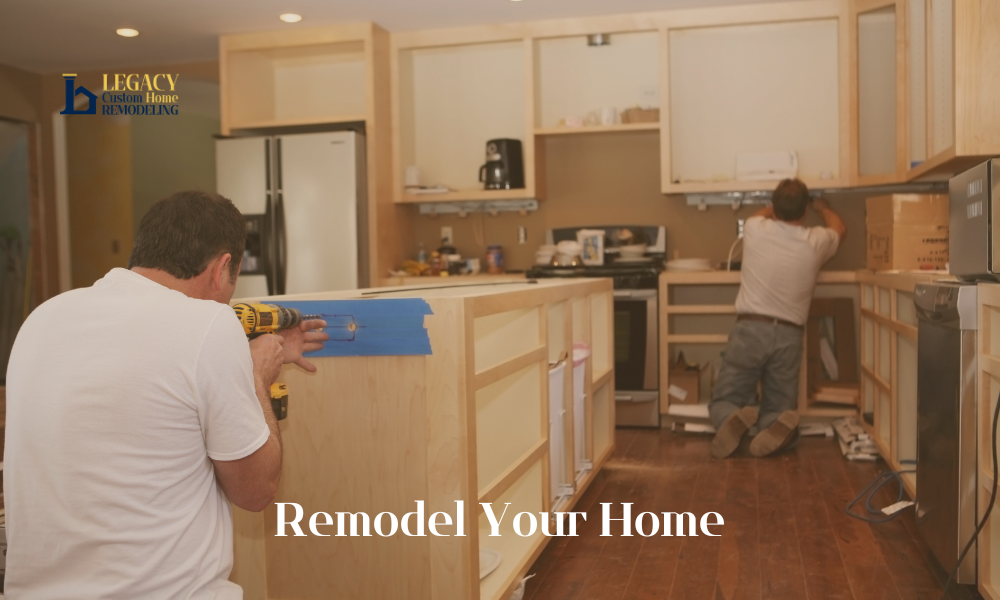
Step 7: Remodel Your Home
The highest ROI is the biggest benefit of Home Renovation. This is where strategy meets execution. Remodeling without an exit plan is how homeowners overspend and underperform.
Every decision from layout changes to material selection should support both today’s livability and tomorrow’s resale or income potential.
Work with a contractor who understands investment-grade remodeling, not just aesthetics
That’s where we help out. We take projects & plan backward from ROI-
what buyers pay premiums for, what appraisers recognize, and what actually moves value in the Houston market.
That means durable finishes, smart layouts, code-compliant upgrades, and clean documentation for future refinancing or sale. That’s also one of the reasons to renovate a home.
Budget Remodeling Strategy
A budget remodeling strategy is to shop smart for deals and set aside 10–20% for unexpected costs. So, it’s best to focus on high-impact areas like kitchens and bathrooms, upgrading them without overspending.
Here’s how I keep remodeling costs under control without killing value.
I always start with the numbers, not the design. If your home is worth $400,000, I treat every dollar like it needs a job. The goal isn’t to spend less. The goal is to spend right.
I’ve seen homeowners blow half their budget on cosmetic upgrades, then panic when plumbing or electrical issues show up. That’s why I build the budget in layers. First, I protect the house. Then I improve it. Only after that do we make it look nice.
A smart budget remodeling strategy looks like this:
- 60% on value drivers
Kitchens, bathrooms, layout fixes, and energy upgrades. These are the projects buyers and appraisers care about. - 20% on protection
Electrical, plumbing, HVAC, roofing, or foundation issues. You don’t see these upgrades, but they prevent expensive surprises later. - 10–15% contingency
Old homes always hide something. I’ve opened walls that looked perfect and found water damage behind them. This buffer keeps the project moving. - 5–10% on finishes
Paint, fixtures, trim, and lighting. These should support the upgrade, not eat the budget.
When you follow this approach, the budget stops feeling tight. You know where the money is going and why. You’re not reacting. You’re in control.
That’s how you remodel with confidence and without regret.
Material Selection For Roi
When I choose materials, I focus on what holds value, not what’s trendy. Buyers and appraisers care about durability, consistency, and clean finishes.
Here’s what works best for ROI:
- Quartz over granite or marble: Durable, low maintenance, and widely preferred.
- Mid-range cabinetry: Solid construction matters more than custom details.
- Luxury vinyl or engineered wood flooring: Looks high-end, costs less, and lasts longer.
- Neutral tiles and finishes: Easier to sell and won’t date the home.
- Energy-efficient fixtures: Lower bills now and stronger resale appeal later.
The rule is simple. Choose materials that age well, perform daily, and make sense to the next buyer.

Best Way To Spend Money On Home Improvements
There are many remodeling projects that can add value to your home. But investing in kitchens, bathrooms, master suites, and energy upgrades is most beneficial. These areas in Houston give you the highest ROI.
These improvements increase resale value, comfort, and monthly savings.
Kitchen remodels in Houston show 70-80% ROI. Energy upgrades reduce cooling bills by 20-30%.
Legacy Custom Home Remodeling focuses on high-ROI upgrades backed by strong market data.
The “Big Three”: Kitchens, Baths, and Master Suites
If you want the highest ROI, you must focus on the rooms that sell homes.
The 2025 Cost vs. Value Report shows Houston kitchen remodels give strong returns. Minor updates often yield over 100% ROI for homeowners.
Here is an average idea of how much you can get & how much ROI you can get from it-
| Project Type | Average Cost (Houston) | Estimated ROI | Resale Impact |
| Minor Kitchen Remodel | $28,000 – $35,000 | 95% – 110% | High |
| Bathroom Refresh | $15,000 – $22,000 | 80% – 90% | Moderate |
| Master Suite Addition | $60,000 – $120,000 | 70% – 85% | High |
| HVAC / Attic Insulation | $12,000 – $18,000 | 100% (with savings) | Critical |
| Replacement Windows | $10,000 – $25,000 | 75% – 85% | Moderate |
A $30,000 kitchen refresh often boosts a home’s resale value by $35,000 to $40,000 in high-demand local neighborhoods.
Energy Savings Upgrades
In our climate, an HVAC Upgrade is a financial necessity, not a luxury. That’s why it is also the best home improvement to increase value.
Attic insulation and high-SEER HVAC upgrades save energy. These upgrades give fast returns through lower cooling bills.
These upgrades provide “Invisible ROI.” They protect interior finishes from humidity problems. They also make the home more marketable today. You may also qualify for the Energy Efficient Home Improvement Credit.
Homeowners add double-pane windows. They often cut annual energy costs by twenty percent each year.
Indoor Air Quality Upgrades
Improving air quality directly affects comfort and health, making it a major selling point. High-MERV air filters, upgraded ventilation, sealed ductwork, and humidity-control systems reduce allergens, odors, and moisture. Homes with cleaner air also support better HVAC efficiency, lowering long-term operating costs.
Water Efficiency Upgrades
Water-efficient systems protect both your utility bills and your plumbing infrastructure. Low-flow fixtures, pressure-regulating valves, and updated supply lines reduce water waste without sacrificing performance. In areas with rising utility costs, these upgrades add practical, everyday value.
Plumbing Fixture Upgrades
Modern plumbing fixtures improve reliability as much as appearance. Replacing aging valves, outdated shutoffs, and worn fixtures reduces leak risk and improves water pressure consistency. Buyers often view updated plumbing as a sign the home has been properly maintained, not just renovated.
Electrical Panel Upgrade Value
Upgrading the electrical panel is one of the highest-impact hidden improvements. A modern panel supports higher electrical loads, safer wiring, EV chargers, and future smart-home upgrades. It also removes red flags during inspections, protecting resale value and reducing buyers’ negotiation leverage.

How To Choose Renovations With The Best ROI?
Not every remodel gives you a strong return. The key is to focus on projects that buyers notice, appraisers value, and that improve daily living. Here’s how I approach it:
First, prioritize high-impact areas:
- Kitchens: Updates to layout, counters, cabinets, and lighting deliver the highest returns.
- Bathrooms: Modern fixtures, tile upgrades, and efficient layouts add both comfort and value.
- Energy efficiency: HVAC, insulation, windows, and lighting lower bills and appeal to buyers.
Next, avoid over-improving:
- Stick close to neighborhood standards—don’t outspend homes around you.
- Refresh rather than replace where possible, like painting cabinets or updating hardware.
Finally, plan for functionality and longevity:
- Durable materials that last longer reduce future maintenance costs.
- Smart layouts and storage upgrades improve usability, making your home more appealing.
You need to combine impact, cost control, and functionality to ensure every dollar spent works toward real ROI.
FAQ
How much does a kitchen remodel cost in Houston in 2026?
An average full kitchen remodel costs between $15,000 and $50,000, depending on materials and size.
What is the 70% rule in home investing?
Investors should pay no more than 70% of the After-Repair Value (ARV) minus the cost of repairs.
Do solar panels add value to a Houston home?
Yes, solar panels can offer up to 100% ROI by significantly reducing electricity costs and appealing to eco-conscious buyers.
What is the best way to save for a house?
Put your savings into a High-Yield Savings Account (HYSA) or a Money Market Fund to protect your principal while earning interest.
Is it better to renovate or sell as-is?
In Houston’s 2026 market, renovated homes sell faster and for a higher premium than “fixer-uppers” because buyers prefer move-in-ready properties.
Conclusion
Investing in your home is the most stable path to increasing your Net Worth. Focus on high-ROI projects like kitchen remodels and ADUs to turn a living expense into real investment power. In Houston, smart leverage and steady remodeling give you a strong financial edge today, too.I encourage you to stop viewing your home as a liability. At Legacy Custom Home Remodeling, we help you unlock the hidden equity in your property. We combine expert craftsmanship with an investor’s eye for value.

Bobby Nation, a second-generation contractor with 35 years of experience, leads every project with expertise and dedication. He works closely with homeowners, guiding them through each step of the remodeling process to ensure a smooth experience and results that meet their goals.