


A successful home remodel needs strategic planning, smart financial structuring, and intelligent contractor management. For Houston homeowners, this process also involves uniquely addressing the local climate. The intense heat and high humidity impact the quality and durability of your remodeled finishes.
At Legacy Custom Home Remodeling, we know that starting strong is key to finishing on budget and on time. While you may already have a guide to your first home renovation, this article provides specialized, advanced steps. The simple rules ring true for any project: find the best people, get them bought in, and help remove obstacles so they can perform.
Step 1: Defining Project Success with Functionality
Before you choose a single paint color or countertop, you must define the functionality of the space you want to remodel. Prioritizing functionality over just Aesthetics is the foundational Planning step for a high-value home remodel. The first step is to answer: where to start remodeling? If you are redoing your kitchen or bathroom, ask yourself: Why doesn’t this space work well now?
Determining the Scope of Work and Functionality
Begin by listing the exact scope of work (e.g., new flooring, updated electrical, or moving an interior wall). Then, sequence this list logically.
For instance, demolition must precede erecting new studs; concealed plumbing and electrical must be done before drywall. This detailed planning helps avoid mistakes and allows you to clearly communicate your goals to every tradesperson.
Setting a Realistic Budget and Contingency (10-20%)
Once the scope of work is clear, obtain quotes and begin budgeting. A common mistake is failing to account for the unknown. Always include a contingency fund of 10% to 20% of the total project costs. This is especially important for older homes in Houston, where unforeseen issues (like old wiring, plumbing, or foundational problems) are common.

Step 2: Hiring and Structuring the Contract for Success
The key to a fast, cost-effective, and high-quality home renovation is securing the right people and aligning their financial incentives with yours.
Vetting the Right General Contractor (and Skipping the Architect)
Finding a highly motivated, local general contractor (GC) is essential. A good GC acts as your project manager, leading a reliable network of subcontractors. To make smart decisions, you must know the crucial questions to answer before remodeling: Do you need an architect, or can a GC and engineer suffice?
While architects are valuable for complex custom builds, they are often not necessary for many additions or remodels. Minimize overhead by pairing a general contractor with a structural engineer to secure permits instead of a full architect.
A competent GC can generate design sketches, and a structural engineer can turn those into actionable CAD drawings that pass local permits and inspections. This approach can knock significant time and cost off your timeline.
Negotiating a Fixed-Fee Structure (Aligning Incentives)
When negotiating the contract, ask your contractor to agree on a fixed fee or percentage-based fee up front, rather than building their fee into the components of the job. Choose a fixed-fee contract to make the general contractor a proactive partner in reducing subcontractor costs.
- Cost Savings: The contractor is now on your side, motivated to negotiate the lowest prices with subcontractors and suppliers to keep the final project cost low.
- Flexibility: You maintain the freedom to personally purchase specific materials and supplies (like appliances or tile) without worrying about the GC marking up the cost.
Step 3: Preparation and Expediting the Construction Phase
The biggest delay in any construction phase is the downtime. It is when workers are waiting for materials, access, or inspection. Your role during this time is to remove obstacles.
Maximizing Crew Efficiency (Making Your Site the Favorite)
You can speed up the project schedule by working closely and collaboratively with the team doing the physical work (the “Work Crew”). Good work crews are in high demand and can choose their job sites. Make yours the preferred choice:
- Offer Access: Allow the work crew full, unrestricted access (if possible) to the property when it’s most convenient for them, which can include early mornings, late evenings, or even weekends.
- Provide Support: Simple gestures like offering refreshments or occasionally providing meals create a positive environment. Happy workers often deliver better, faster quality work. This partnership is how projects can go from a 9-month timeline to just 5 months.
For reliable project management that prioritizes efficiency, always go with a trusted name like Legacy Custom Home Remodeling.
Structural Rough-In and Houston’s Climate Needs
The rough-in stage is where the demolition is complete, and electrical and plumbing are being taken care of. For a home renovation in Houston, this phase needs special attention:
- Ensure proper installation of HVAC systems and use climate-appropriate materials.
- The intense heat and high humidity necessitate superior vapor barriers, mold-resistant drywall, and energy-efficient insulation to boost durability and comfort.
Step 4: Installation and Quality Control
After the rough-in inspection is passed, the project moves to the installation of finishes.
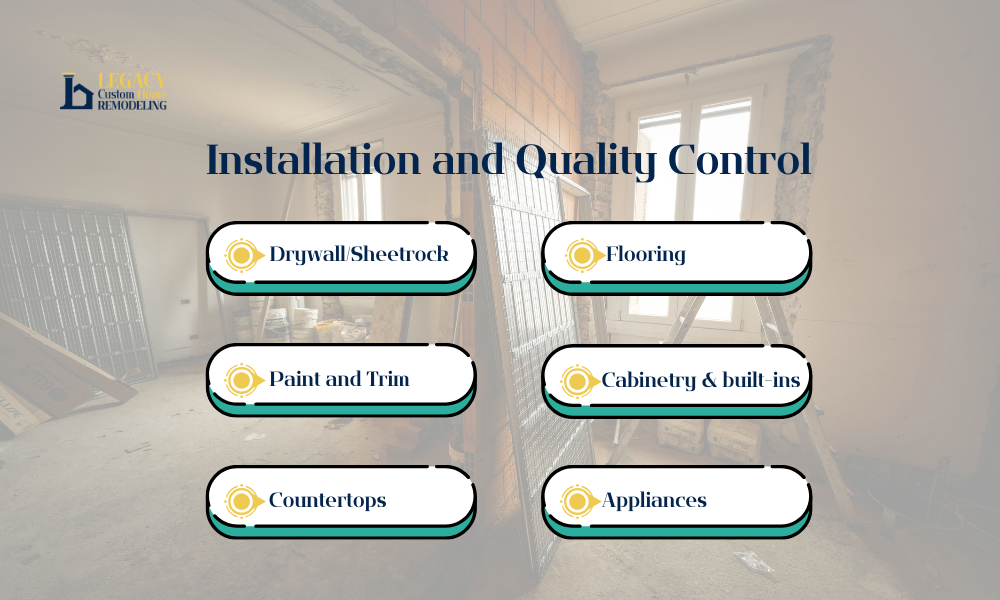
Maintaining the correct sequence is non-negotiable for quality. Installation typically proceeds as follows:
- Drywall/Sheetrock (followed by mudding and sanding)
- Flooring (or at least protection for the subfloor)
- Paint and Trim
- Cabinetry and built-ins
- Countertops (template and install)
- Appliances, final plumbing, and electrical fixtures.
Step 5: Final Walkthrough and Signing Off (The Punch List)
Near completion, conduct a walkthrough with your contractor to create a punch list. It’s a formal record of minor items that require fixing or finishing. This careful, detailed process is far more realistic than what HGTV teaches us, where projects seemingly wrap up in a week with zero issues.
Pay close attention to detail during this quality control check. Keep records of this list and all project documentation, including warranties, before making the final payment.
Conclusion: Building Lasting Value and Durability in Houston
A home remodel in Houston is a significant investment that should pay dividends in both lifestyle and property value. By focusing on clear functionality planning, establishing a transparent fixed-fee contract with a great remodeling contractor, and proactively managing the work crew, you can streamline the process and boost your return on investment (ROI).
These steps will ensure your new living space provides lasting durability and comfort, weathering the unique challenges of the Houston climate for years to come.
Frequently Asked Questions (FAQs)
What is the 30% rule for renovations?
The “30% rule” is a guideline suggesting your total renovation cost should not exceed 20% to 30% of the home’s value after the remodel. This helps ensure a strong return on investment (ROI) and prevents over-improving the property beyond local market value.
2. What are the main goals you want to accomplish in the remodel?
Your main goals should be defined during the planning phase and prioritize functionality (improving how you live in the space) and durability (using appropriate materials for Houston’s climate) to ultimately increase value.
3. How do I select the list of remodeling stages?
The stages are dictated by construction logic and local code inspection requirements. The standard sequence is: planning & permits, demolition, structural rough-in (MEP), finishes, and finally the walkthrough and punch list.
4. How can I find a reliable contractor for my home remodeling project?
Find a reliable general contractor by checking licenses, securing detailed quotes, and requesting references for similar projects in the Houston market. Choose a contractor who is transparent and offers clear communication.
5. How can I protect my valuables during the remodeling process?
Prior to starting, remove all items from the work area and move them off-site or into secure storage. Seal off the renovation zone with plastic to contain dust and debris, and keep records of high-value, non-movable items.
6. Should I hire a renovator for small projects?
Yes, for nearly all projects involving plumbing, electrical, or structural changes. Professionals ensure safety, quality, compliance with Houston Building Codes, and handle the necessary permits and inspections while providing a warranty.

Bobby Nation, a second-generation contractor with 35 years of experience, leads every project with expertise and dedication. He works closely with homeowners, guiding them through each step of the remodeling process to ensure a smooth experience and results that meet their goals.